Particulate matter , matters!
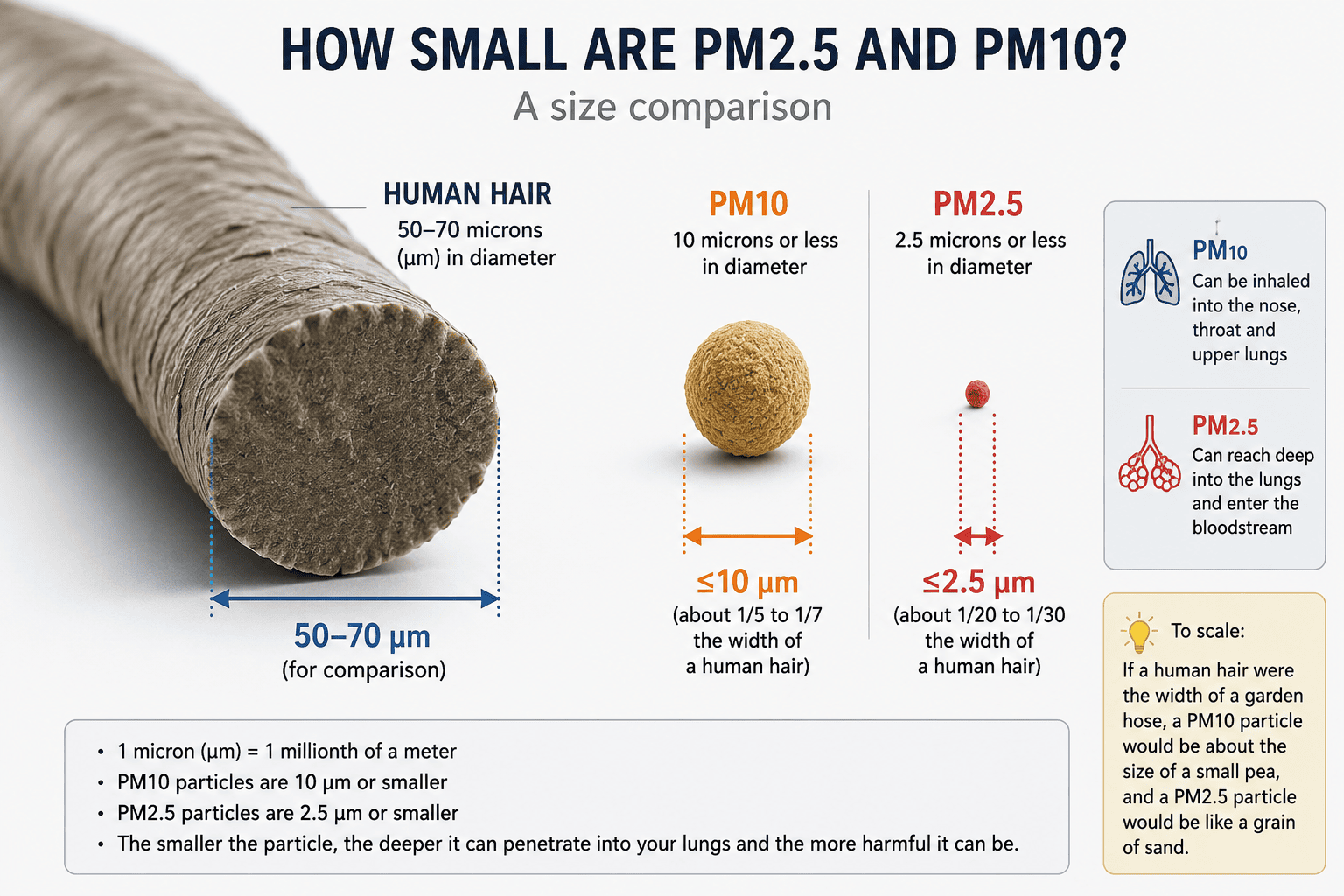
PM2.5 stands for Particulate Matter 2.5, which refers to tiny airborne particles with a diameter of 2.5 micrometers (µm) or smaller.
Because these particles are so small, they can be inhaled deep into the lungs, enter the bloodstream, increase the risk of asthma attacks, bronchitis, heart disease, stroke, and lung cancer.
For comparison, a human hair is about 50–70 µm wide, so PM2.5 particles are about 20–30 times smaller.
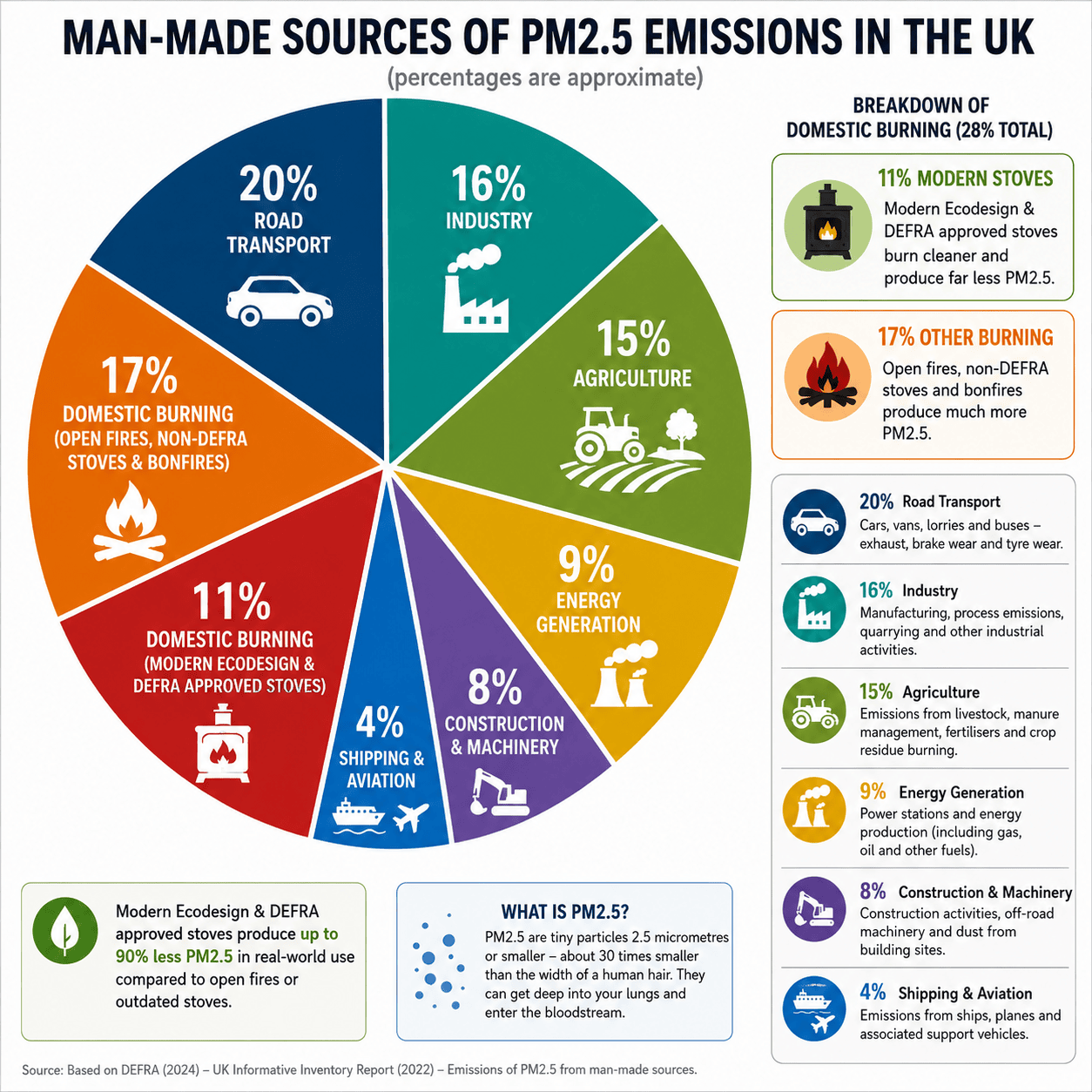
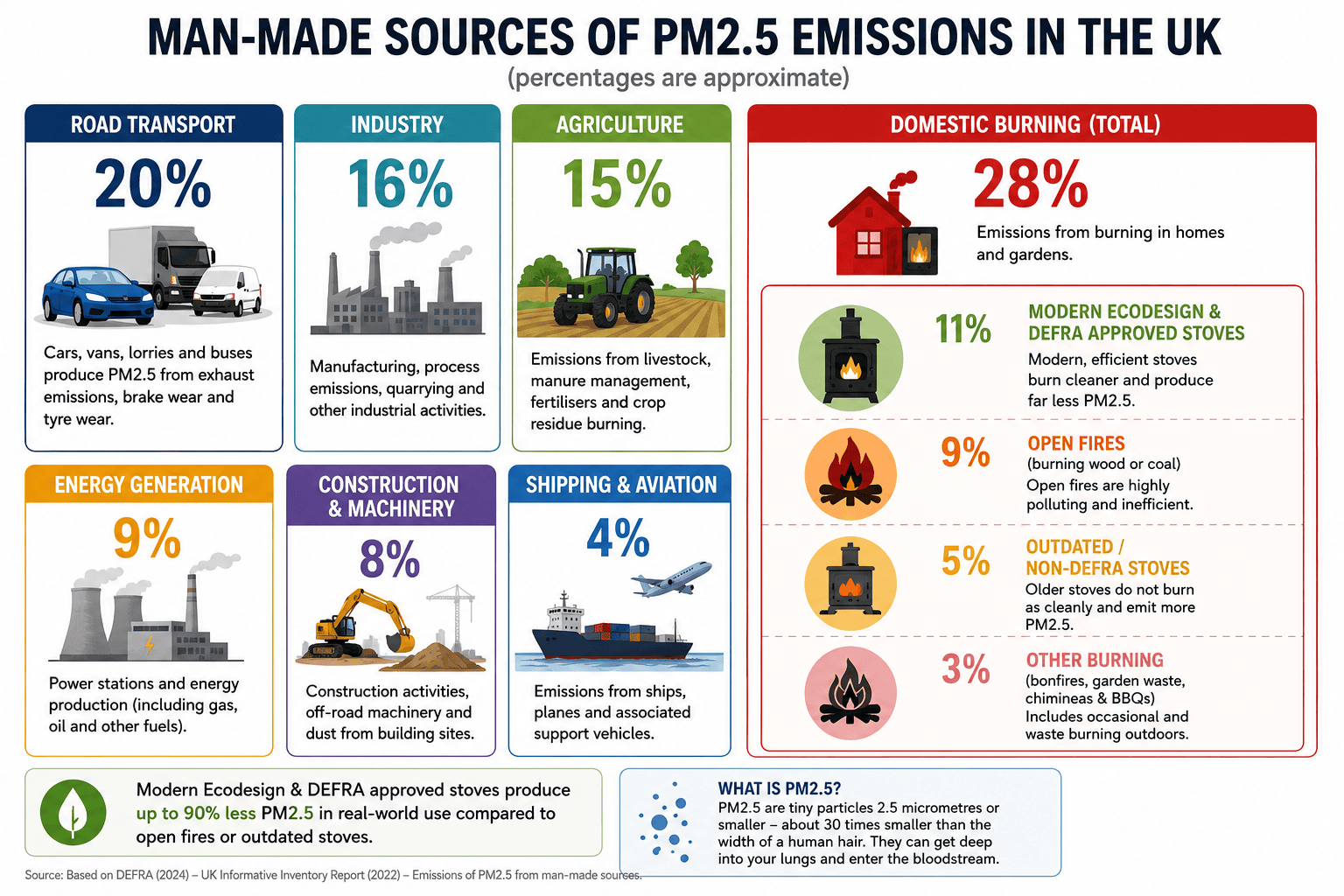
Where does PM2.5 come from?
Common sources include:
Vehicle brake dust and tire wear
Bonfires and Fire-pits
Charcoal barbeques and smokers
Wildfires
Burning wood, coal for indoor heating
Energy production (gas, electric nuclear)
Construction dust
Construction dust
Shipping and Avaiation
Some particles also form in the atmosphere from gases like sulfur dioxide and nitrogen oxides.
PM2.5 Air Quality Guide
| PM2.5 concentration (24-hour average) | Air quality |
|---|---|
| 0–12 µg/m³ | Good |
| 12.1–35.4 µg/m³ | Moderate |
| 35.5–55.4 µg/m³ | Unhealthy for sensitive groups |
| 55.5–150.4 µg/m³ | Unhealthy |
| Above 150.4 µg/m³ | Very unhealthy to hazardous |
People most at risk of breathing in particlate matter are those living near major roadways due to exhaust pipe emissions, brake/tire wear, and road dust; people living or working in areas with high vehicle traffic, or near power plants and active manufacturing sites; also neighborhoods reliant on open coal fires and / or older models of woodburning stoves.