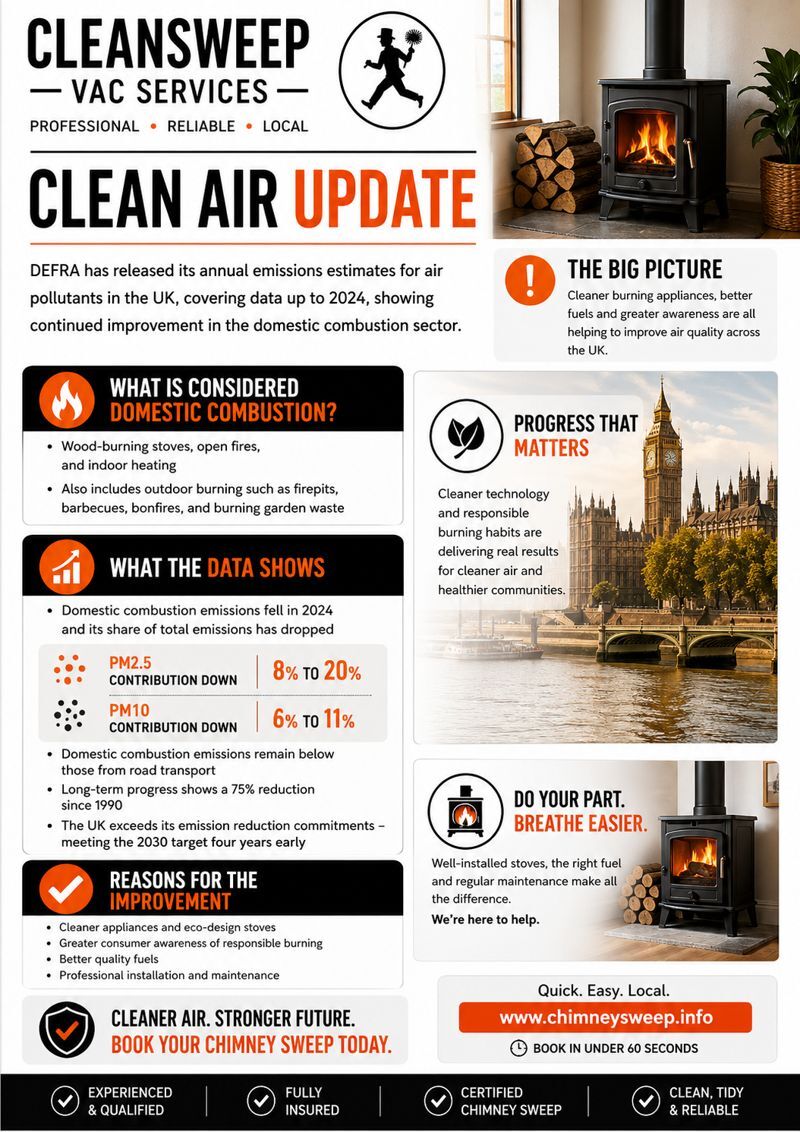
Clean Air Update
The latest UK air quality data released by DEFRA in Feb 2026, show that emissions from domestic combustion (wood-burning stoves, open fires, indoor heating, fire pits, bonfires, barbecues, and garden waste burning) continued to decline in 2024.
Modern appliances, cleaner fuels, and better public awareness are contributing to the reduction.
Domestic combustion now contributes a smaller proportion of national particulate emissions than in previous years.
The UK is on track to meet its emissions reduction targets ahead of schedule.
What is Domestic Combustion?
Domestic combustion refers to the burning of solid fuels in and around the home, including:
Wood-burning stoves
Wood-burning stoves
Multi-fuel stoves
Open fireplaces
Indoor heating appliances
Fire pits
Bonfires
Barbecues
Burning garden waste in outdoor braziers
Although often associated with cosy home heating, these activities produce particulate matter (PM), one of the main contributors to poor air quality.
Understanding PM2.5 and PM10 - pollutants
PM2.5 : Fine particulate matter smaller than 2.5 microns.
These particles:
Can penetrate deep into the lungs
Can enter the bloodstream
Are linked to respiratory and cardiovascular diseases
Are considered the most harmful airborne particulate pollutant
PM10 : Particles smaller than 10 microns.
These particles:
Can be inhaled into the respiratory system
May aggravate asthma and other breathing conditions
Are larger than PM2.5 but still harmful
Why Emissions Are Falling
Several factors are driving improvements:
1. Cleaner Stove Technology
Modern EcoDesign-compliant stoves burn fuel more efficiently, produce fewer emissions and use advanced airflow systems to improve combustion.
Compared with older stoves, emissions can be dramatically reduced when operated correctly.
2. Better Fuel Quality
The move away from burning wet wood, high-moisture fuels and poor-quality coal products,
towards ready-to-burn kiln-dried logs, seasoned logs and approved smokeless fuels has reduced particulate emissions.
3. Improved Installation Standards
Professional installation ensures correct flue sizing, proper draw, safe operation and improved combustion efficiency.
Poorly installed appliances often burn less efficiently and generate more smoke.
4. Better Maintenance
Regular chimney sweeping removes soot and tar deposits, improves airflow, helps appliances burn cleaner and reduces the risk of chimney fires.
A blocked or dirty flue can significantly increase smoke emissions.
5. Increased Public Awareness
Consumers are becoming more aware of using the correct fuel, operating stoves correctly and maintaining appliances regularly.
Cleaner air delivers significant benefits:
Health Benefits : Reduced respiratory illness, Lower risk of cardiovascular disease, better outcomes for children and older adults.
Environmental Benefits : Lower particulate pollution, reduced local air quality issues, progress toward national environmental targets.
Community Benefits : Cleaner neighbourhoods, reduced smoke nuisance, greater acceptance of responsible stove use.