What is carbon monoxide poisoning?
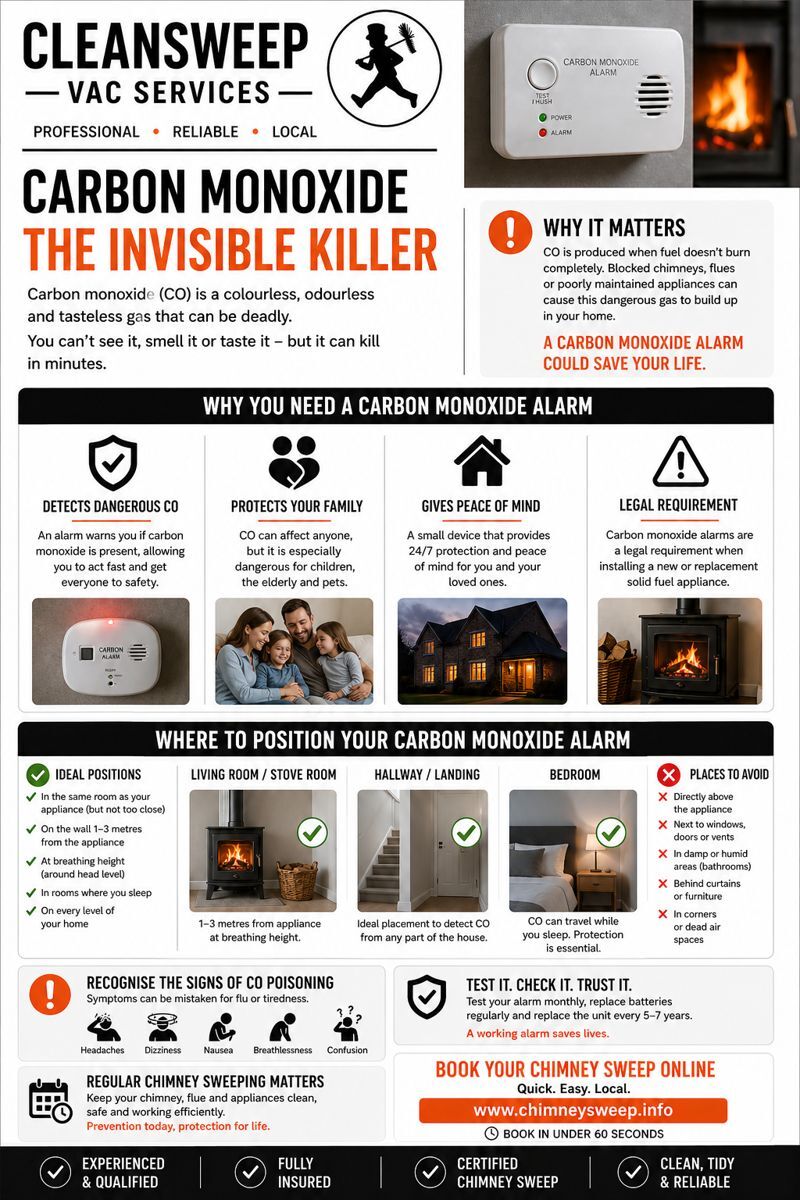
Carbon monoxide is dangerous because it is a colourless, odourless, and tasteless gas that can kill quickly without warning.
It's chemical symbol is CO and not CO2 which is carbon dioxide.
It's chemical symbol is CO and not CO2 which is carbon dioxide.
CO is produced when fuels do not burn properly, often due to blocked chimneys, faulty flues, or poorly maintained appliances.
A carbon monoxide alarm can save lives by warning occupants before gas levels become dangerous.
A CO alarm is different from a smoke alarm.
You should have BOTH in your property if you have any form of heating that burns fuel.
This is a legal requirement with solid fuel appliances.You may need more than one if you have more than one appliance.
E.g. Logburner, Gas Boiler and Open Fire will need three, one near each appliance
Oil fired heating and Bio-ethanol burners also need CO alarms.
Why You Need a CO Alarm
To detect dangerous carbon monoxide levels
Protect families, children, pets, and vulnerable people
Provide peace of mind
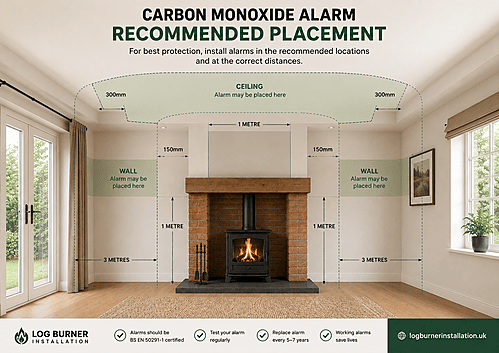
Correct Alarm Placement
In the same room as the stove or appliance
Around 1–3 metres away from the appliance
At breathing height on the wall OR on the ceiling
For additional safety
In bedrooms at sleeping height and hallways
Incorrect Placement
Directly above appliances
Near windows, vents, or doors
In corners or behind curtains
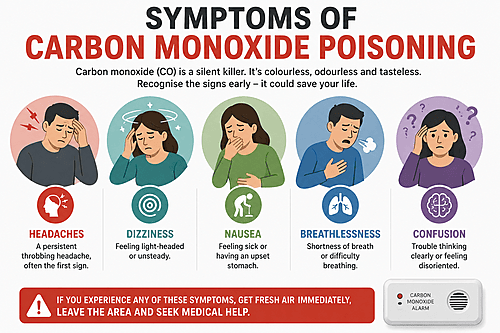
Symptoms of CO Poisoning
Headaches
Dizziness
Nausea
Breathlessness
Confusion
These symptoms can often be mistaken for flu or tiredness.
Regular chimney sweeping and appliance maintenance help prevent dangerous blockages; improve efficiency and reduce the risk of CO build-up
Stay Safe
Test your alarm is working monthly
Replace batteries when needed
Replace the alarm unit every 5–7 years or replace the internal CO sensor.
Book regular chimney sweeping services online