What is smokeless fuel
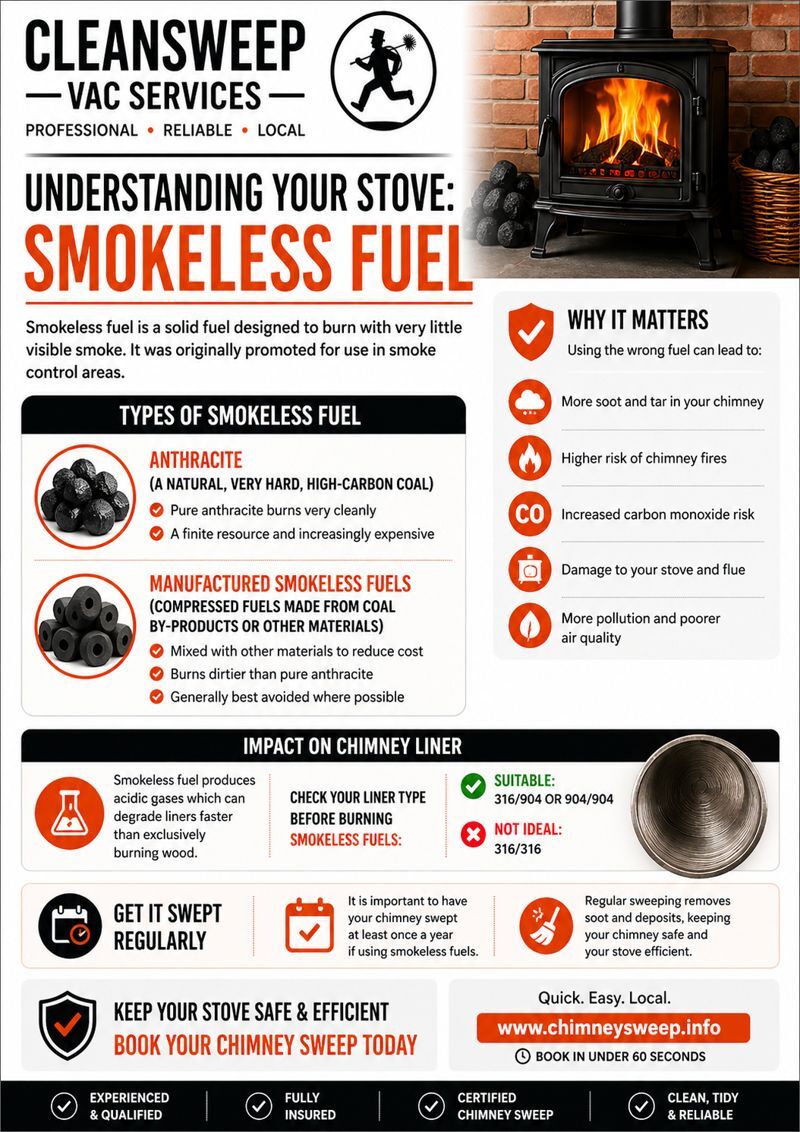
Smokeless fuel is a solid fuel designed to burn with very little visible smoke.
It was originally introduced in smoke-control areas, which are areas where you are not allowed visable smoke to come out of the chimney.
It was originally introduced in smoke-control areas, which are areas where you are not allowed visable smoke to come out of the chimney.
Types of Smokeless Fuel
Anthracite : A natural, hard, high-carbon coal, which burns very cleanly.
Considered the preferred smokeless fuel option.
More expensive because it is a finite natural resource.
Manufactured Smokeless Fuels : Made from compressed coal by-products or other materials.
Cheaper than anthracite but produces more deposits of soot and creosote and burns less cleanly.
Generally best avoided when possible.
Using the wrong fuel can cause:
Increased soot and tar buildup in the chimney.
Higher risk of chimney fires.
Greater carbon monoxide risk.
Damage to the stove and flue system.
Increased pollution and poorer air quality.
Impact on Chimney Liners
Smokeless fuels create acidic gases that can degrade chimney liners faster than wood-burning alone.
Before using smokeless fuels, check your liner type:
* ✅ Suitable: **316/904** or **904/904** stainless steel liners.
* ❌ Not suitable: **316/316** liners.
Maintenance Recommendations
Have your chimney swept regularly.
If burning smokeless fuels, arrange a chimney sweep at least once per year.
Regular sweeping removes soot and deposits, improving safety and efficiency.
Anthracite is the cleanest smokeless fuel option, while manufactured smokeless fuels can create more deposits and wear on chimney systems. If you use smokeless fuels, ensure your chimney liner is suitable and keep up with regular chimney sweeping to maintain safety and performance.