
Does something look out of place in your burner?
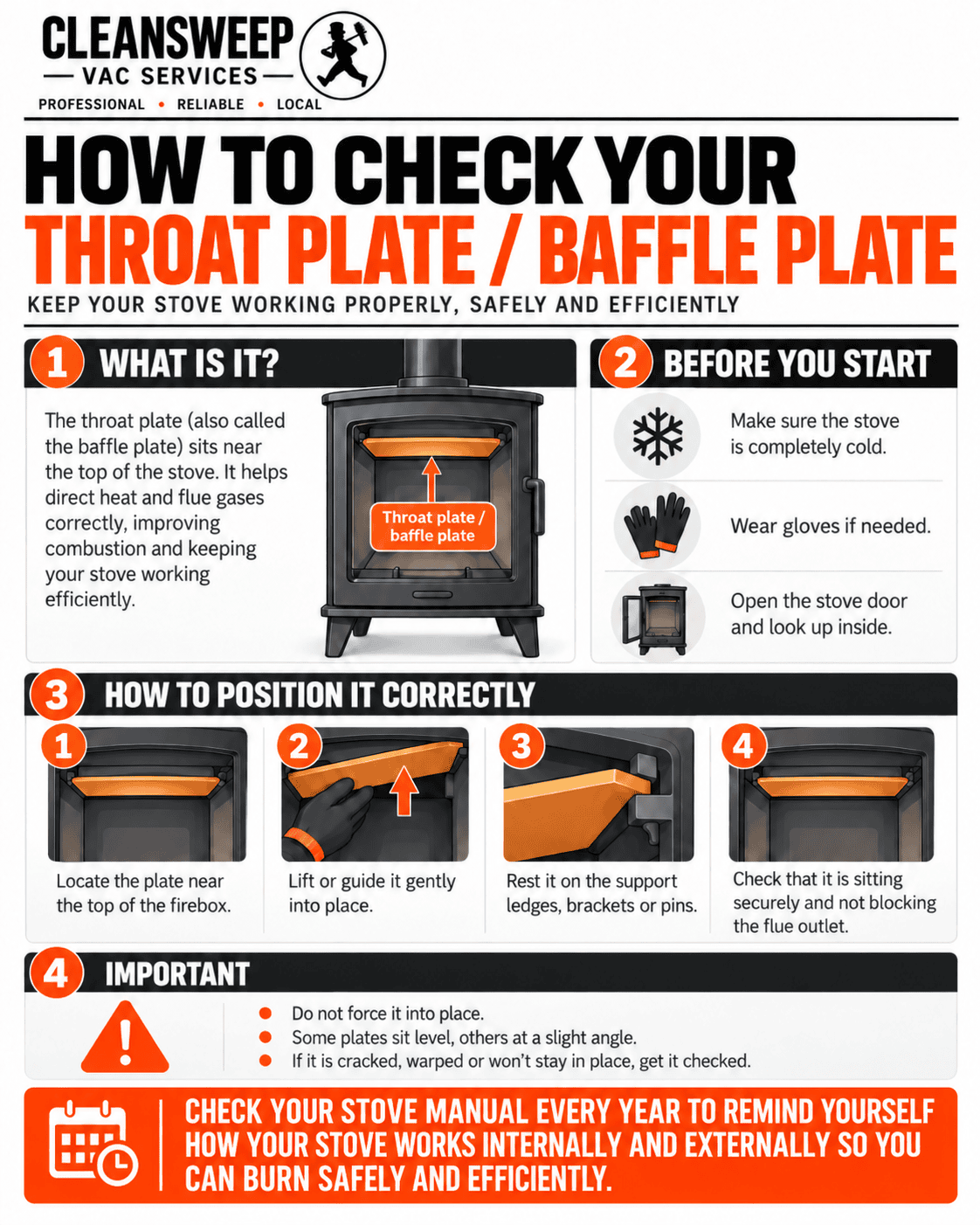
Occasionally you may find that your baffle has dropped or has become dislodged. This is not usually something to worry about unless it has warped ( bent out of shape ) or has cracked and fallen apart and is usually something that you can fix yourself.
The throat plate, also known as the baffle plate, sits inside the top of the firebox and helps direct the hot gases around the stove before they leave through the flue. If it has been moved during cleaning or has dropped out of position during use, it is important to put it back correctly before using the stove.
Make sure the stove is completely cold before attempting to adjust it. Open the stove door and look up inside the firebox. The throat plate will normally rest on support ledges, brackets or retaining pins near the top of the stove. Depending on the stove design, you may need to lift the plate slightly, move it backwards or sideways, and then lower it so that it sits securely on its supports.
Check that the plate is level, stable and properly located. It should not be hanging down at one side, resting loosely, or obstructing the flue outlet. Some throat plates are designed to sit at a slight angle, so do not assume that it should always be perfectly horizontal.
Do not force the plate into position. Baffle plates can be made from steel, cast iron, vermiculite or other heat-resistant materials, and some types can crack if handled roughly.
The exact position and fitting method varies between stove models, so always check the instructions in your stove manual. The manual should show the correct orientation of the throat plate and how it fits onto its supports. If you do not have the manual, it can often be downloaded from the stove manufacturer's website using the stove make and model. Download your manual.
If the throat plate is warped; cracked due to overburning; badly corroded or will not stay securely in position, it should be checked and, if necessary, replaced before the stove is used.
