How wet is the wood you are burning?
“Seasoning” wood means drying it out properly before burning it.
Freshly cut (“green”) wood contains a lot of moisture — often 40–60% water.
Seasoning reduces that moisture so the wood burns hotter, cleaner, and safer.
Seasoning reduces that moisture so the wood burns hotter, cleaner, and safer.
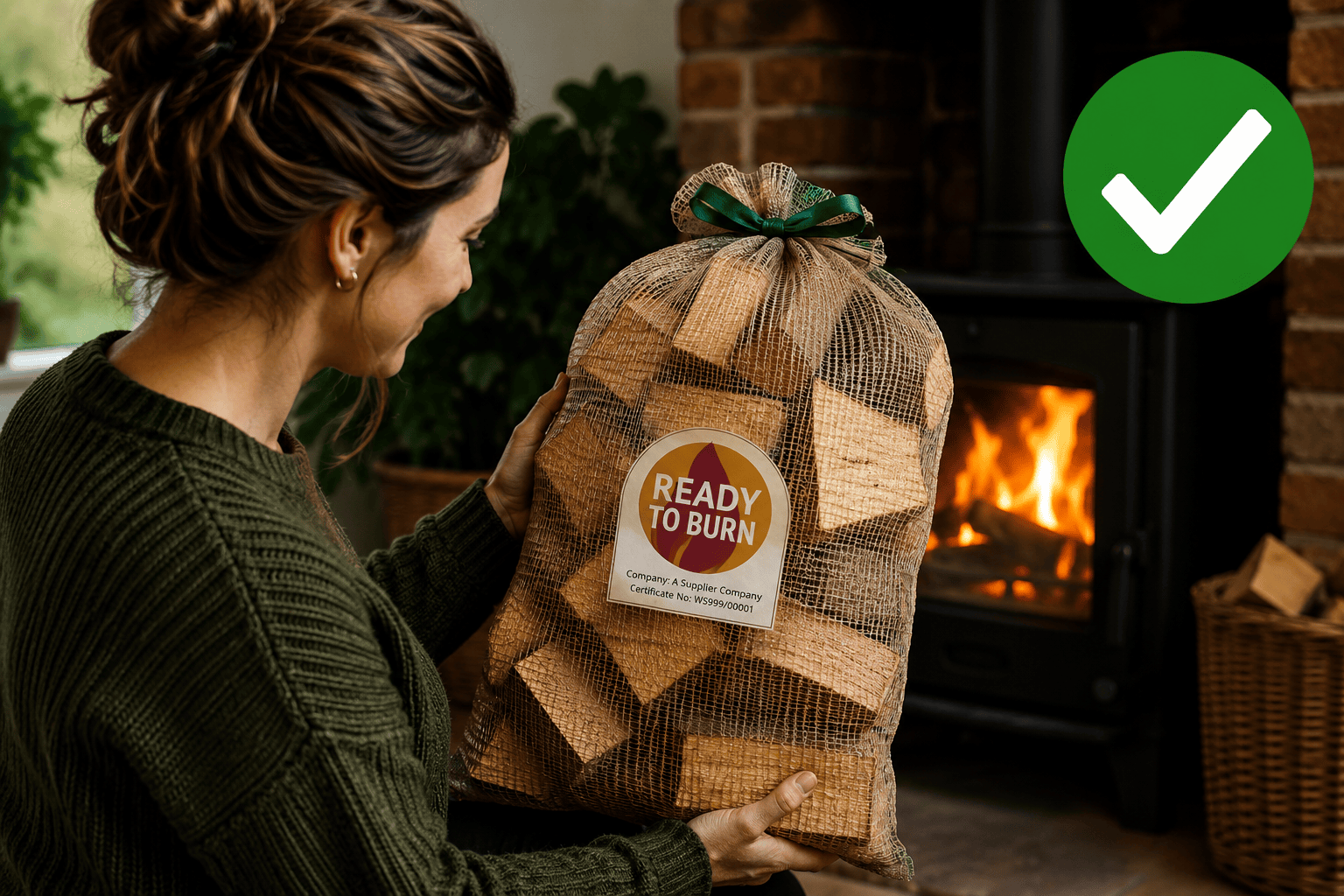
Seasoned firewood is:
Cut and split, Stored in a dry, ventilated place and
left to dry naturally over time
Good firewood should usually have:
Below 20% moisture content
Cracks in the ends, lighter in weight
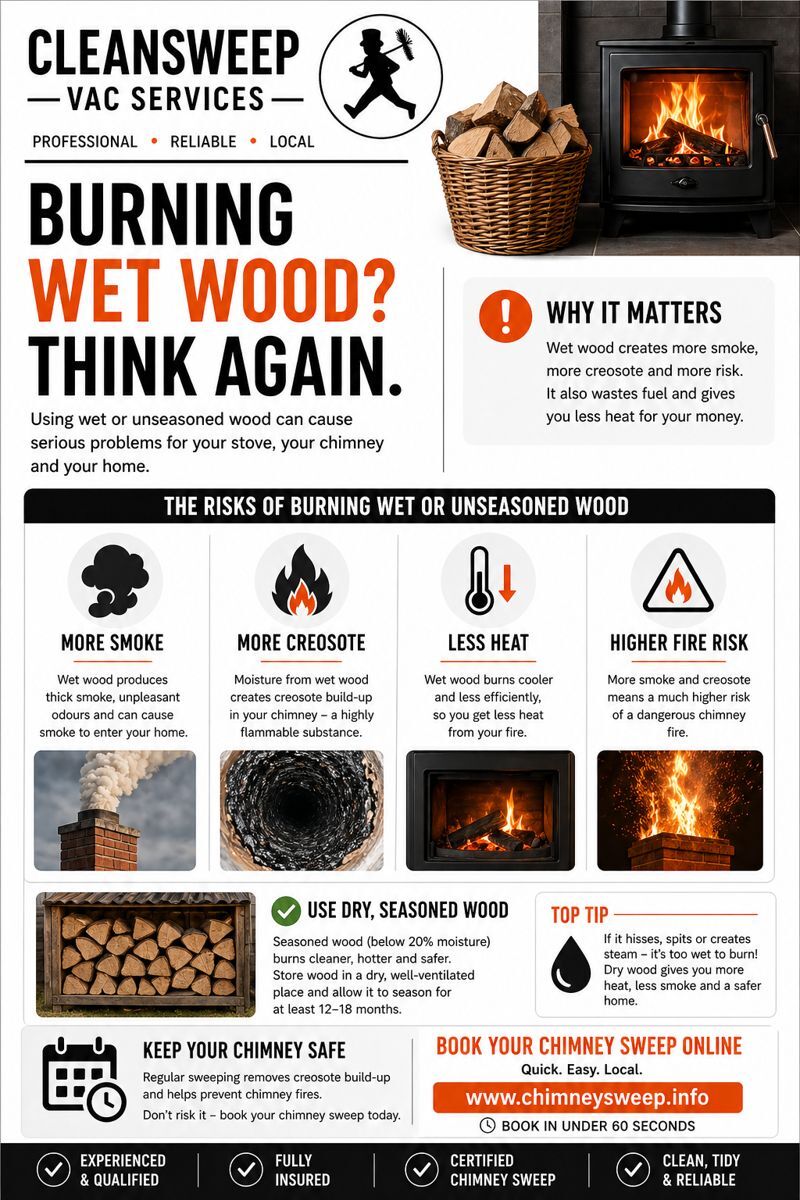
Wet or unseasoned wood wastes energy because the fire has to boil off water before the wood can burn properly. Burning wet wood is unsafe and inefficient because it:
Produces more smoke, Gives less heat
Creates more creosote buildup in chimneys
Increases the risk of a chimney fire
Wet wood contains moisture and causes
poor combustion, leading to
poor combustion, leading to
thick smoke and unpleasant smells,
lower heating efficiency, wasted fuel and is a greater fire risk.
Recommended advice
Use dry, seasoned wood with moisture content below 20%.
Store wood in a dry, ventilated area
Typical seasoning times:
Softwoods: about 6–12 months
Hardwoods: about 12–24 months
Best way to season and store wood
Split logs before storing
Stack them off the ground
Keep airflow around the pile
Cover the top but leave sides open
Store in sunlight/wind if possible
A moisture meter is the easiest way to check if wood is ready to burn.
Regular chimney sweeping helps remove creosote and reduces chimney fire risk.