
Particulate matter , matters!
PM10 stands for Particulate Matter10, which refers to tiny airborne particles with a diameter of 10 micrometers (µm) or smaller.
Because these particles are small, they can be inhaled and;
👃 Irritate the nose and sinuses
- Runny or blocked nose , Sneezing, Sinus irritation
😣 Irritate the throat
- Sore throat, Scratchy throat, Hoarseness
😮💨 Affect the airways
- Coughing, Wheezing, Chest tightness, Increased mucus production
🫁 Can worsen lung diseases
❤️ Can contribute to cardiovascular problems
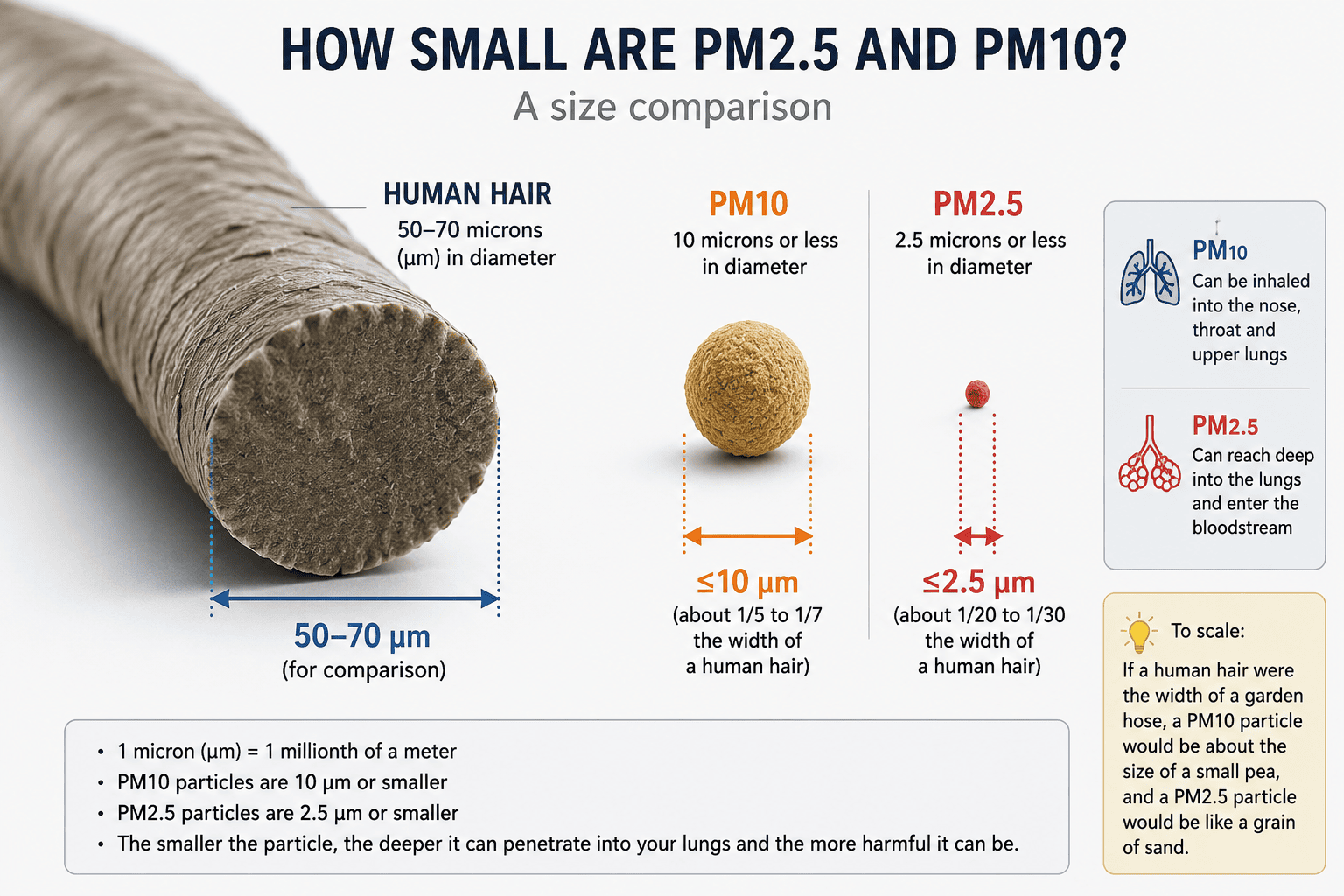
For comparison, a human hair is about 50–70 µm wide, so PM2.5 particles are about 20–30 times smaller.
Where does PM10 come from?
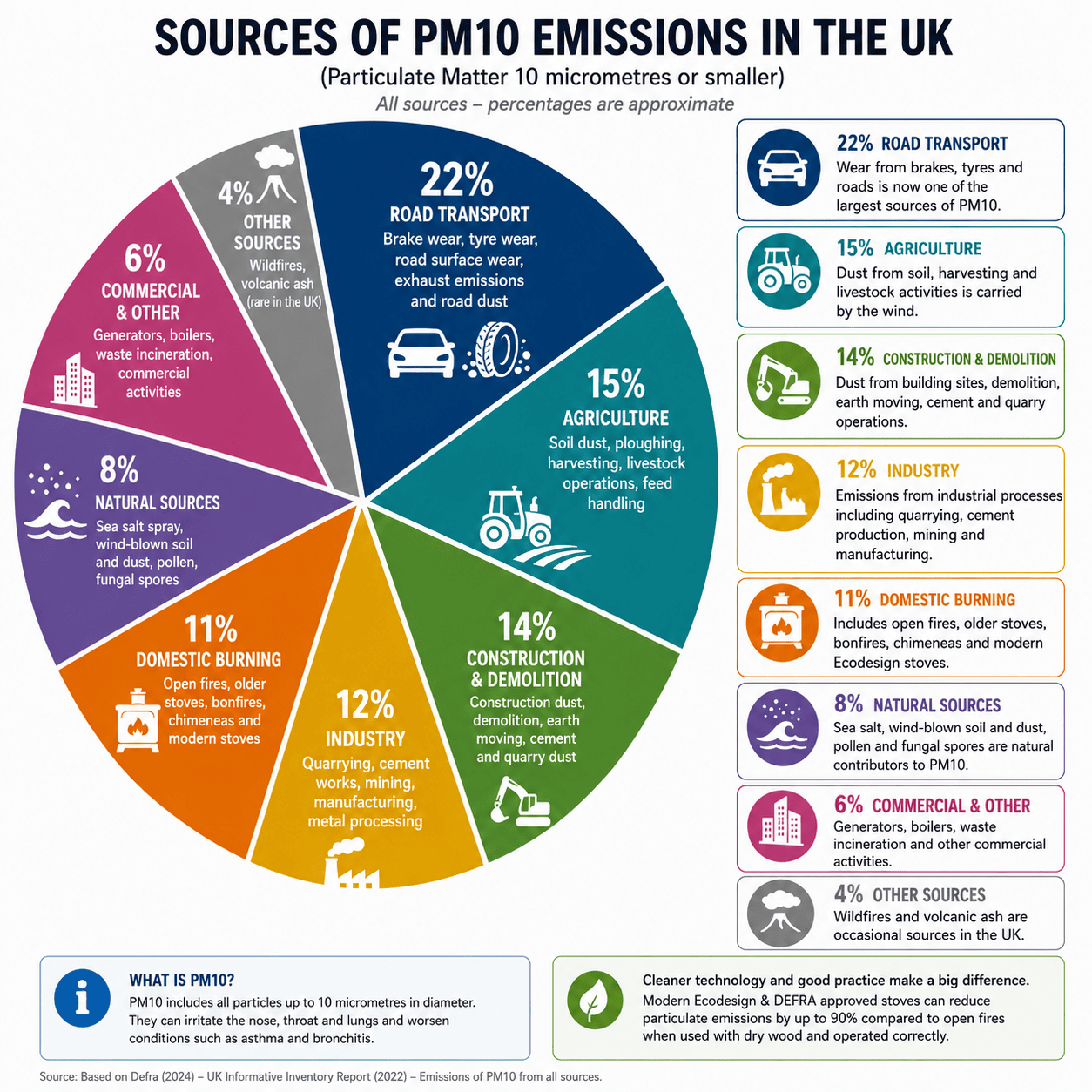
Common sources include:
🚗 Road transport = Brake wear,Tyre wear,
Road surface wear, Exhaust emissions (especially from older diesel vehicles) +
Dust stirred up by passing traffic
🚜 Agriculture = Ploughing and harvesting, Soil dust, Livestock operations, Feed handling
🚧 Construction and demolition = Cutting concrete and bricks, Demolition, Earth moving, Cement and quarry dust
🏭 Industry = Quarrying, Cement works, Mining, Manufacturing, Metal processing
🏡 Domestic burning = Open fires, Older wood-burning stoves, Bonfires , Chimineas, Log pits. Modern Ecodesign stoves (much lower emissions than older appliances, but still produce some particulate matter)
🌊 Natural sources = Sea salt spray, Wind-blown soil and dust, Pollen , Fungal spores, Wildfires, Volcanic ash in wind, Sand blown in wind.
PM comparison
| PM10 | PM2.5 |
|---|---|
| Up to 10 µm | Up to 2.5 µm |
| Includes dust and coarse particles | Mainly fine particles from combustion |
| More likely to be trapped in the nose and upper airways | Can reach the deepest parts of the lungs and enter the bloodstream |
| Often comes from mechanical processes (wear, dust) | Mainly produced by burning fuels and chemical reactions in the atmosphere |
People most at risk of breathing in particlate matter are those living near major roadways due to exhaust pipe emissions, brake/tire wear, and road dust; people living or working in areas with high vehicle traffic, or near power plants and active manufacturing sites; also neighborhoods reliant on open coal fires and / or older models of woodburning stoves.
